Cleaning and Stain Removal on Stone and Quartz Tops
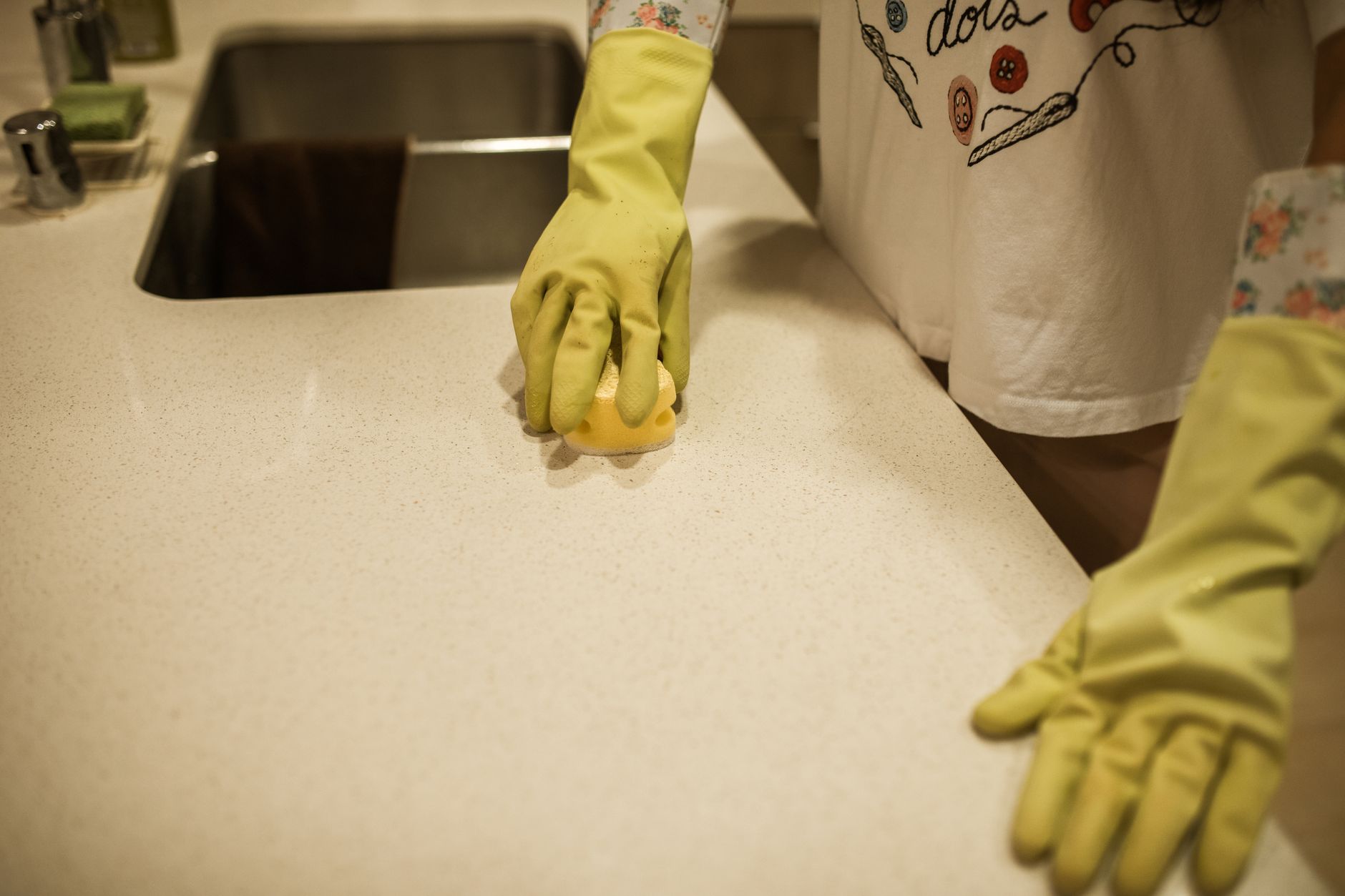
Most countertop stains lift with warm water, a few drops of mild dish soap and a soft cloth, provided they are caught early. The ones that do not lift are usually oil, dye or a hard water crust that has been sitting for weeks. Which cleaner and which method work depends on the material under the stain, so the questions below start with the daily routine and move to the stubborn marks.
What Is the Daily Cleaning Routine for a Stone or Quartz Top?
The daily routine is warm water, a drop of mild dish soap and a soft cloth, followed by a dry towel. The dry towel is the step people skip, and in Riverside County it is the step that matters, because hard water dries into a pale film on any surface left wet.
Sponges with a rough scrubbing side scratch polished marble and dull the finish on honed stone, so the soft side only. A microfiber cloth lifts crumbs and grease without leaving fibres behind. Spray cleaners labelled for granite are fine on granite and quartzite, but check the label before using one on marble, because many are mildly acidic.
Once a week, a slower pass pays off. Clear the counter, wipe it with the soapy cloth, rinse the cloth and wipe again with clean water, then dry the whole top. The second pass takes off soap residue, which otherwise dulls the finish and holds dust. Corners, the strip behind the faucet and the line along the backsplash collect the most, so a soft toothbrush earns its place there.
Which Cleaners Should Be Kept Off the Counter?
Acidic and abrasive cleaners should be kept off natural stone, and bleach and harsh solvents should be kept off quartz. Vinegar, lemon, and bathroom limescale removers dissolve the surface of marble in minutes and can dull the sealer on granite and quartzite over time. Scouring powders leave fine scratches that collect dirt.
On quartz the resin is the weak point. Strong solvents such as paint thinner and nail polish remover soften it, and heavy bleach can cause yellowing. A cloth with warm soapy water handles nearly every job on a quartz top, and a plastic scraper lifts dried food without cutting the surface.
How Does a Poultice Remove a Set-In Stain?
A poultice removes a set-in stain by drawing it up out of the stone as the paste dries. It is a thick paste of an absorbent powder, such as baking soda or plain clay, mixed with a liquid that suits the stain. The paste is spread about a quarter inch thick over the mark, covered with plastic wrap taped at the edges, and left for a day or two. Then the plastic comes off, the paste dries on the stone, and the dry crust is scraped off with a plastic card.
The liquid depends on the stain. Oil stains from cooking oil, butter or lotion take a poultice mixed with a degreasing agent. Organic stains from coffee, tea, wine and juice take a poultice mixed with a mild hydrogen peroxide solution, used with care on light stone. Rust stains need a product made for rust on stone, because the wrong chemical can set the stain permanently. A poultice may need two or three rounds on a deep stain.
What Works on Hard Water Film and Rings?
A damp cloth and a stone safe cleaner work on fresh hard water film, and a soft scrub with a plastic pad handles film that has built up. The film is calcium and magnesium left behind by evaporating water, and it sits on top of the surface. On granite, quartzite and quartz, a stone safe cleaner with a neutral pH loosens it. On marble, avoid acid products, since the film often has a faint etch beneath it that no cleaner removes.
The better fix is prevention. Wiping the area around the faucet dry after use and moving the soap pump onto a small tray keeps the ring from forming. A tray catches the drips and the wet base of the bottle, which is where most rings begin.
Can Quartz Be Cleaned the Same Way as Granite?
Quartz can be cleaned the same way as granite on most days, with the difference that quartz never needs a sealer and tolerates no harsh solvents. Granite takes a penetrating sealer and tolerates mild stone cleaners. Both are fine with soap and water. Dried paint, gum and nail polish come off either surface with a plastic scraper, then a damp cloth.
A heavily stained quartz top rarely needs more than a non-abrasive cleaning paste and patience. Granite and quartzite that stain easily usually need a fresh coat of sealer once clean, and the water drop test shows whether it is time.
What About Cutting Boards, Knives and Hot Pots?
Cutting boards protect the knife and the counter, and stone and quartz both dull a blade quickly. Cutting directly on a stone top leaves tiny scratches in a polished finish and does nothing for the edge of the knife. A wooden or plastic board costs little and saves both the counter and the blade.
Hot pots deserve the same care. A trivet by the range is a better habit than any cleaner.
How Can Oil and Grease Be Kept From Soaking In?
Oil and grease are kept from soaking in by wiping spills as they happen and keeping the sealer fresh on granite, quartzite and marble. Oil darkens a porous stone because it slowly sinks into the pores, leaving a dark patch that fades only with a poultice. A kitchen island near the cooktop collects the most splatter, so it gets wiped at the end of each cooking session with a degreasing dish soap.
A sealed stone gives a few minutes of warning before oil soaks in, and an unsealed one gives almost none. That window is the reason sealing is part of upkeep.
Does Soap Build Up on a Counter?
Soap does build up on a counter, usually as a dull, slightly sticky layer that makes the surface look cloudy. It comes from using too much dish soap or a cleaner with a waxy additive, and from not rinsing. A damp cloth with plain water and a dry towel afterward removes it. Cleaners that promise shine often leave a coating that traps dirt, so a plain approach tends to look better over the years.
When Is a Stain Past Home Treatment?
A stain is past home treatment when two or three poultices fail to lighten it, when the mark is a rough or dull patch that the finger can feel, or when the surface has etched. Etched marble can be honed and repolished by a stone restorer. Chipped edges and cracked seams are repaired with colour matched resin, and a deep scorch on quartz or solid surface is sanded or replaced, depending on the depth.
Trying stronger chemicals at home tends to make a repair harder. A stone that has been left alone after a failed poultice is easier to restore than one that has been scrubbed with five products.
A Few Habits That Keep a Top Looking New
Wipe spills as they happen, dry the faucet area, use trivets and boards, and run the water drop test each season. Those four habits cover most of what goes wrong on stone and quartz in Inland Empire kitchens.